

If you are one of the 800,000 people in Ireland who do not have a workplace pension, your paycheck may be a bit lighter in January. This month, Ireland’s Auto-Enrolment Pension Scheme (a.k.a. MyFutureFund) launched, aiming to address the shortcomings of the State Pension. If you are part of this cohort, 1.5% of your gross salary is now being directed into a retirement account.
We joined Mike O’Mahony of MyWallSt’s Stock Club podcast to walk listeners through all the details.
You can listen here, or wherever you get your podcasts, or read the transcript below.
With an ageing population and inflation on the rise, auto-enrolment is a key way Europeans can help ensure their comfort in retirement — but there’s a lot to unpack.
One especially important point: if you’re in the highest tax bracket in Ireland, you may be leaving money on the table by relying solely on auto-enrolment. Additionally, fund selection is fairly limited, giving you little control over where your money is invested.
Some questions we discuss on the pod:
What should I do if I’m an employer?
Will I be enrolled if I’m self-employed?
My employer hasn’t spoken to me about auto-enrolment or MyFutureFund — should I ask them about it?
Should I start my own personal pension or stick with auto-enrolment?
Can I have both a personal pension and auto-enrolment?
Is auto-enrolment good for Ireland’s overall pension market?
Will it have a positive knock-on effect on Ireland’s investing culture?
For more information head to MyFutureFund, or read Moneycube’s FAQ on Auto-enrolment in Ireland.
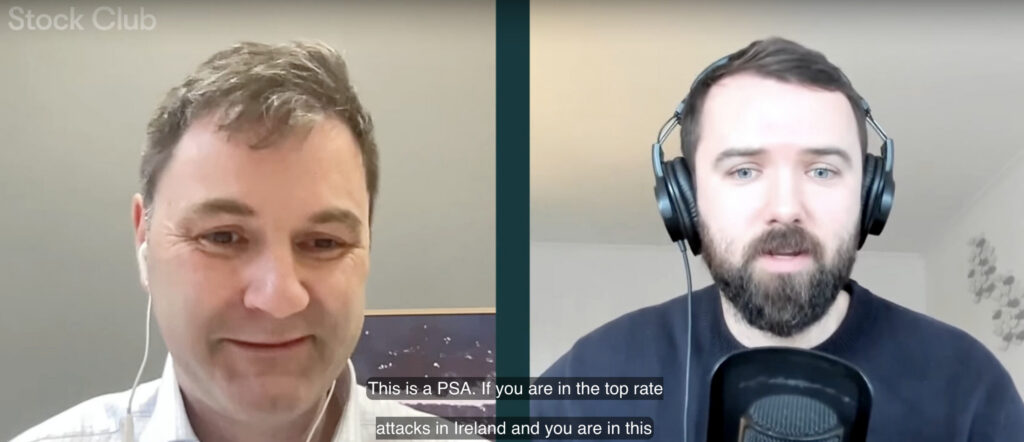
This is an edited transcript of the conversation, recorded in late January 2026.
Mike O’Mahony (Host): This is a very timely episode — Moneycube’s idea, actually. A lot of people noticed lighter pay packets this month as auto-enrolment kicked in. Let’s start with the basics. What is auto-enrolment, for anyone who hasn’t been following it closely?
Ralph (Moneycube): It’s essentially the government’s attempt to ensure people automatically save for retirement. It sounds sensible, and it is. The scheme was originally meant to launch back in 2006, so it’s been a long time coming, but it’s finally here.
Around 800,000 people are expected to be covered. Ireland’s demographics are changing — more retirees and fewer workers — and that gap has to be funded somehow. Auto-enrolment creates a system where people build up retirement savings automatically. Contributions start small and increase gradually over the next decade.
Mike: To be specific, it applies to private-sector employees aged 23 to 60 earning over €20,000 a year, provided they’re not already contributing to a payroll pension.
Ralph: That’s right. And that number — almost a million people without a payroll pension — really surprises people. It doesn’t mean they’re not saving at all, but it highlights a big gap.
Mike: Let’s talk contributions. It starts at 1.5% from the employee, 1.5% from the employer, plus a 0.5% state top-up. That rises over time to 6% employee, 6% employer, and 2% state by 2034.
Ralph: Exactly. It’s phased in to soften the impact. A sudden 6% hit would be too much for most people and employers. Even at full maturity, it’s still lower than contribution levels in countries like Australia, but it becomes meaningful over time.
The structure of Auto-enrolment and some key unknowns
Mike: What happens to the money once it’s paid in?
Ralph: There are still some big unknowns. For example, it hasn’t been clearly explained how withdrawals will work at retirement, or what the long-term fee structure will be.
The government appointed three major fund managers — BlackRock, Amundi, and Irish Life — to manage the money. Funds are split across low-, medium-, and high-risk options, plus a default “lifestyling” fund that gradually reduces risk as you approach retirement.
What’s missing is transparency. There are no detailed fund factsheets yet, which is unusual.
Mike: So it’s accessible and simple — but not necessarily suitable for everyone.
Ralph: Exactly. The purpose is to create a baseline income in retirement, not to make people wealthy. Ireland’s state pension won’t be sustainable in its current form long-term, so this helps reduce reliance on it.
The State pension problem
Mike: The State pension has been described as a ticking time bomb across Europe. What does the future realistically look like?
Ralph: It will likely pay less in real terms, start later, and possibly become means-tested. Life expectancy has increased, work is less physical, and the ratio of workers to retirees has changed dramatically. No single reform will fix that.
Older voters are a powerful group politically, so changes will be gradual — but change is inevitable.
Mike: France raising the pension age caused mass protests. Ireland is already heading toward 67 and beyond.
Ralph: Yes, and auto-enrolment is partly about intergenerational fairness. You and your employer fund your own retirement pot, rather than relying entirely on future workers.
Why auto-enrolment isn’t right for high earners
Mike: Let’s get into the key issue for high earners. Why shouldn’t top-rate taxpayers stay in auto-enrolment?
Ralph: One of the biggest differences between auto-enrolment and a private pension is the tax treatment. With a private pension, if you put €100 in and you’re a top-rate taxpayer, you get tax relief at 40%, so it only costs you €60 net. If you’re a standard-rate taxpayer, you get 20% relief.
Auto-enrolment works very differently. There’s no tax relief on your contribution. Instead, the state provides a top-up of 0.5%. When you look at that overall, it works out at an effective tax relief of about 25%. That’s actually better than standard-rate relief, but it’s materially worse than the 40% relief available through a private pension.
Mike: So if you’re paying the top rate of tax and you’ve been auto-enrolled, you’re getting a significantly worse deal from a tax perspective than you would with a private pension.
Ralph: Exactly. That’s why this should be a real wake-up call for higher earners. If you stay in auto-enrolment, you’re leaving a substantial amount of money on the table.
The good news is you can opt out after six months and put a proper private pension in place instead.
Employers and self-employed people
Mike: What should employers be doing right now?
Ralph: They should already be registered on myfuturefund.ie. Revenue payroll data determines eligibility, and contributions are collected by direct debit.
Employers also need a clear position for staff — whether auto-enrolment makes sense, or whether an occupational pension would be better.
Mike: And if you’re self-employed?
Ralph: You won’t be auto-enrolled. But you should absolutely treat this as a reminder to review your own retirement planning.
Auto-enrolment vs private pensions
Mike: If you’re an employee, how do you decide between auto-enrolment and a private pension?
Ralph: Auto-enrolment contributions are small. If you have serious retirement goals — early retirement, travel, lifestyle flexibility — you’ll need private funding.
The questions are: how much control do you want, how much flexibility, and how important tax efficiency is to you? Auto-enrolment is deliberately simple. That’s a strength — but also a limitation.
Mike: Can you do both?
Ralph: Yes. Auto-enrolment isn’t technically a pension — it’s a retirement savings scheme. That’s why it doesn’t offer tax relief. You can still open a personal pension and claim relief there, especially valuable if you’re in your 40s or older.
Bigger picture: investing in Ireland
Mike: How does auto-enrolment fit into Ireland’s wider investing landscape?
Ralph: It adds complexity, but it also brings pensions to the forefront. Investing access has improved massively over the last decade. People are less dependent on banks and more aware of global investing.
Taxation still lags behind other countries, but change is happening slowly. Culture always moves faster than policy.
Final advice
Mike: What’s your number one piece of advice for someone starting to take retirement planning seriously?
Ralph: Nobody cares more about your money than you do. Even small actions — adjusting contributions, reviewing insurance, using available tax relief — can make a real difference. Most people build wealth slowly, through good habits over time.